
AI systems for ecommerce in the UK, built to reduce manual work and improve how WooCommerce and WordPress businesses operate.
I design and implement AI systems for ecommerce, automation and custom technical workflows built around real business operations. This is not about adding AI for the sake of it. It is about solving specific problems inside WooCommerce and WordPress setups with systems that make the business easier to run, easier to manage and better prepared to scale.
Some businesses need better lead handling. Others need automation for WooCommerce, structured internal workflows, AI-assisted support or custom functionality that standard tools cannot support properly. The goal is always the same: less manual work, better systems and stronger technical execution.
Custom AI plugins, tailored logic and technical functionality built for WooCommerce and WordPress environments where standard tools stop being enough. You can explore this further in custom AI plugins.
AI automation and structured workflows designed to reduce repetitive work, connect processes and improve how leads, content, support requests or internal operations are handled. See how this works in AI automation.
Systems built around real commercial needs, often connected to AI for ecommerce, WooCommerce development and WordPress development, not generic AI add-ons.
AI systems here are not extra tools. They are working systems that reduce manual effort and improve how the business actually operates.
In practice, this means building systems that handle repetitive work, connect workflows and improve how information moves across the business. That can include AI automation, custom logic, support processes, data handling or structured workflows inside WooCommerce and WordPress.
Depending on the project, this can involve AI automation, custom AI plugins or broader AI for ecommerce systems built around how the business actually works.
The starting point is always a business problem, not an AI tool.
Most projects begin because something is slowing the business down. Too much manual admin, disconnected tools, inefficient support handling, repetitive tasks or internal workflows that depend too heavily on people instead of structured systems.
In those cases, the solution is not another plugin or another external platform. The solution is a system that handles those processes more reliably, with better structure and less manual effort.
This is why the work often connects directly with WooCommerce development and WordPress development, where AI becomes part of a wider technical setup rather than an isolated feature.
The result is a system that fits the business, reduces operational friction and creates a stronger foundation for growth, especially in ecommerce environments where scale quickly increases complexity.
Automation and structured workflows
Systems that reduce manual work, automate repetitive tasks and create a clearer operational flow across the business.
Not generic AI add-ons
This is not about adding chatbots or AI labels without purpose. It is about building something useful, controlled and aligned with real business operations.
Real systems in real use
The best way to understand this is through case studies, where systems, automation and workflows are applied in real business scenarios.
AI systems are usually needed when the business becomes too dependent on manual work and disconnected processes.
Most businesses do not actively look for AI systems. They reach a point where operations slow down, tasks are repeated manually and systems stop scaling properly. That is where structured AI systems and automation start to make sense.
Too much manual work
Repetitive admin, duplicated tasks or workflows that require constant manual input instead of running through automation and structured systems.
Disconnected tools
Platforms and tools that do not communicate properly, forcing manual data handling and increasing errors across the business.
Inconsistent processes
Tasks handled differently each time, depending on the person, leading to unreliable results and inefficient workflows.
Platform limitations
WooCommerce or WordPress setups that cannot support required logic without workarounds, often solved through WooCommerce development, WordPress development and custom system implementation.
Scaling breaks the workflow
What worked at a smaller stage becomes inefficient as order volume, content or internal operations grow, especially in ecommerce environments.
No clear control over operations
Lack of visibility on how workflows run, where time is lost or how systems interact across the business, making optimisation difficult.
Different AI systems, built to solve specific operational problems inside the business.
These are not random AI features. Each system is designed to solve a specific issue: reducing manual work, improving workflows, handling enquiries or building more reliable operational logic inside WooCommerce and WordPress.
Handling enquiries and pre-sales questions
AI systems that respond to customer queries, guide users and reduce repetitive communication work using AI agents, improving response speed and consistency.
Explore systemsReducing repetitive admin work
AI automation systems that handle background tasks, connect workflows and remove manual steps across operations, especially in WooCommerce and WordPress environments.
Explore automationAccessing internal knowledge quickly
Systems that retrieve the right information from documents, databases or internal content using RAG-based setups, improving speed and decision-making.
Explore systemsImproving customer support workflows
Structured support systems that make responses faster, more consistent and less dependent on manual handling, especially as the business scales.
Explore support systemsStructuring lead handling and follow-up
Systems that capture, qualify and organise leads more efficiently using structured workflows and automation, reducing missed opportunities.
Explore lead systemsBuilding custom systems inside your platform
When standard tools are not enough, custom AI systems and functionality are built directly into WooCommerce or WordPress to support real business logic.
See technical workReal AI systems built to solve real operational problems.
This is where AI systems actually make an impact. Not as concepts, but as real implementations that reduce manual work, improve workflows and make the business easier to run, especially in ecommerce and operational environments. You can explore more examples in the full case studies section.
 AI SYSTEM
Custom pricing system and automation for print eCommerce
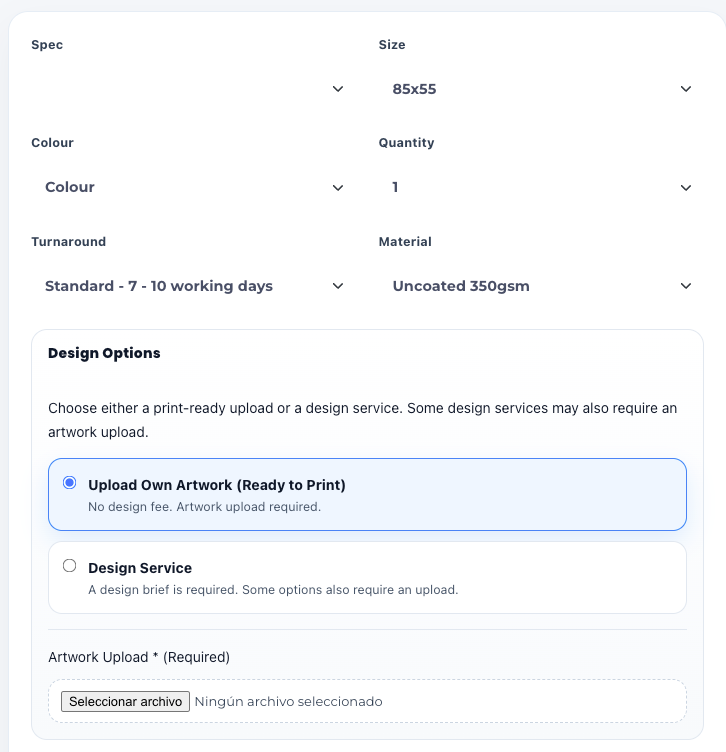
A WooCommerce store was relying on manual pricing logic that was slow, inconsistent and difficult to scale. A custom AI-supported system was built to handle complex pricing rules, automate calculations and improve how the store processes orders.
The result was a cleaner workflow, less manual intervention and a system that could scale without increasing operational complexity.
 AI WORKFLOW
Property platform automation and data processing system
A real estate platform was handling property data manually across multiple sites, creating inconsistencies and unnecessary workload. A structured AI workflow was implemented to automate imports, organise data and standardise processes.
The result was a more reliable platform, reduced manual handling and a consistent system across all properties and locations.
AI systems are most useful where the business still depends too much on manual work, repeated tasks or inefficient processes.
The value does not come from the tool itself. It comes from improving how work moves through the business. These systems are usually applied where time is being lost, workflows are inconsistent or the current setup becomes harder to manage as the business grows.
WooCommerce stores and operational workflows
AI systems can improve product logic, pricing workflows, order handling, support flows and internal operations. In many cases, this connects directly with WooCommerce development, AI for ecommerce and WooCommerce automation to replace manual work with structured logic.
WordPress websites and lead workflows
These systems can structure lead capture, enquiry handling, routing and content processes. They are often combined with WordPress development and AI lead capture systems to create a setup that is more reliable and easier to manage.
Support, enquiries and communication
AI systems can reduce response time, handle repeated questions and improve consistency in how customer communication is managed. This often overlaps with AI customer support and AI agents when the business needs a faster and more structured response layer.
Business workflows and automation
Automation can move data, connect tools and reduce manual intervention across the business, creating a more efficient and scalable system. This is usually part of a wider AI automation setup rather than a single isolated feature.
A structured way of building AI systems that solve real operational problems.
Most projects do not start with a clear specification. They start with something not working properly. The focus is to understand that first, then design and implement the right system around it.
The goal is not to build something complex. The goal is to build something that works reliably.
Many businesses already have tools, plugins or partial solutions. Adding more without understanding the real issue usually creates more friction instead of solving it, especially in WooCommerce and WordPress environments.
That is why the process focuses on clarity first, then implementation. The result is an AI system that is easier to manage, more stable and aligned with how the business actually operates.
Understand the real problem
Identify where time is being lost, where workflows break and what needs to change before thinking about tools or AI solutions.
Define the right system
Decide whether the solution is AI automation, custom logic, a plugin or a combination of systems.
Build and integrate
Implement the system directly inside WooCommerce, WordPress or the required environment so it works as part of the existing setup.
Refine with real usage
Adjust the system based on how it performs in practice, improving reliability, efficiency and long-term scalability.
Explore related AI systems pages for ecommerce, automation and custom technical implementation.
If you want to go deeper into how this work applies in real WooCommerce and WordPress setups, these pages cover AI automation, custom plugin development and AI systems for ecommerce in more detail.
Common questions about building AI systems for real business use.
These are the questions that usually come up before starting a project. The focus is on what works in practice for WooCommerce, WordPress and operational workflows, not on AI trends or generic solutions.
What do you actually build when you say “AI systems”?
AI systems that automate tasks, structure workflows or improve how the business operates. This can include custom logic, automation, support handling, lead workflows or AI-assisted functionality inside WooCommerce and WordPress.
Is this about using AI tools like ChatGPT or Zapier?
Not on their own. Tools like ChatGPT, automation platforms or APIs can be part of the setup, but the real work is designing the system around the business problem. The goal is not the tool itself, but the workflow and technical structure built around it.
Can this be added to an existing WooCommerce or WordPress site?
Yes. Most projects are built on top of an existing setup. This can include AI automation, custom plugin work, integrations or improvements to how the current system operates.
Do I need a large business for this to make sense?
No. It depends on the operational problem. If the business is losing time on repetitive work, handling too much manually or struggling with inefficient workflows, even a smaller setup can benefit from a structured AI system.
Will this replace manual work completely?
Not completely. The goal is to reduce repetitive and unnecessary work, improve consistency and free up time for more valuable tasks, not to remove all human involvement from the business.
What is the first step to get started?
The first step is understanding the real problem. Once that is clear, it becomes much easier to define whether the right solution is automation, custom development, AI-assisted workflows or a combination of systems. The next step is usually to get in touch and explain what is not working properly.
If your business still depends on manual work or inefficient workflows, this is usually the next step.
The goal is not to “add AI”. The goal is to replace what is slowing the business down with a system that works more reliably and fits how the business actually operates.
This can involve AI automation, custom AI plugins, workflow systems or deeper technical implementation inside your current setup. The first step is simply understanding what is not working properly.
Start with the real problem
No unnecessary tools. The focus is on identifying what is actually creating friction inside the business.
Build the right system
AI automation, custom logic or plugin-based functionality, depending on how the current setup needs to work.
Integrated into your setup
Built inside WooCommerce or WordPress, not as a disconnected add-on that creates more complexity.
Designed for real use
Systems designed for day-to-day operations, long-term stability and practical business use — not just theory.