
AI systems and automation for eCommerce businesses that want to improve operations, workflows and performance.
I build AI-powered systems for eCommerce businesses using WooCommerce and WordPress. This includes automation, custom plugin development, workflow optimisation and AI-assisted processes designed around how the business actually runs.
The focus is not on adding AI features. The focus is on improving how the store operates, how data flows and how processes are handled behind the scenes.
Reduce manual work across orders, data, support and internal processes.
Build tailored logic inside the store where standard tools are not enough.
Make the business easier to run, not just the website nicer to use.
AI for eCommerce is not about adding trend-driven features. It is about improving how the store actually operates behind the scenes.
In practice, that can mean automating repetitive tasks, improving how orders and enquiries are handled, structuring internal workflows, moving data more reliably between systems or building custom logic where standard eCommerce tools are not enough.
Most eCommerce businesses do not need “more AI”. They need better systems for how the store runs.
That usually means reducing manual work, improving the flow between tools, making processes more consistent and giving the business more control over what happens after a customer clicks, buys or submits an enquiry.
Some projects focus on automation. Others need custom plugin logic or deeper WooCommerce development. The common point is that the work is built around operational improvement, not around AI as a label.
The result is a store that is easier to manage, more structured behind the scenes and better prepared to scale without adding more friction.
Automation, workflows and platform logic
Systems that improve how the store handles orders, support, data flow and internal operations.
Not generic AI add-ons
The goal is not to install another tool with an AI label. The goal is to improve how the business operates.
Better systems, less operational friction
Good AI implementation helps the store scale more cleanly and reduces the amount of work that still depends on manual handling.
Most eCommerce businesses reach a point where growth creates more work, more complexity and less control.
That is where AI systems and automation start to make sense. Not to replace the business, but to remove friction and make operations more structured.
In more complex cases, this work connects directly with WooCommerce development, where custom functionality and system logic are built directly into the store.
The issue is not the store itself. It is how the store operates behind the scenes.
As the business grows, manual work increases, workflows become harder to manage and systems start to disconnect. What used to work at a small scale becomes inefficient, slow or inconsistent.
This is where AI for eCommerce becomes relevant. Not as a feature, but as a way to restructure how the business operates, reduce repeated work and improve how processes flow across the store.
This often connects with automation, custom plugins and deeper WooCommerce development.
Too much manual work
Orders, data handling and internal processes require constant manual intervention.
Disconnected tools
Systems do not communicate properly, forcing data to be moved manually across platforms.
Inconsistent workflows
Processes depend on people rather than structured systems, creating errors and inefficiencies.
Scaling issues
What worked at a smaller stage becomes harder to manage as the business grows.
AI for eCommerce is applied where the store needs better systems, not just more features.
The strongest improvements usually happen behind the scenes. Order workflows, support handling, product logic and internal operations all become easier to manage when the right system is in place.
Order handling and fulfilment workflows
Improve how orders move through the store, trigger internal actions and connect to backend operations without unnecessary manual work.
Product logic, pricing and store behaviour
Structure how products behave inside WooCommerce, especially where pricing, configuration or workflow logic is too complex for standard setups.
Customer support and repeated communication
Handle common queries, repeated support tasks and communication workflows more consistently using AI-assisted systems.
Internal processes and connected systems
Improve how data moves between the store, internal tools and external platforms so the business becomes easier to run as it grows.
Different ways AI is applied in eCommerce, depending on the business and the problem.
Not every store needs the same setup. Some need automation. Others need custom plugin logic or deeper system-level improvements. The key is choosing the right approach for how the store actually works.
AI automation for store operations
Reduce manual work across orders, workflows and internal processes using structured AI automation.
Custom plugin development
Build tailored logic inside the store using custom AI plugins when standard tools are not enough.
AI-assisted support and communication
Improve customer support workflows and handle repeated queries more efficiently through AI-assisted systems.
Data handling and system integration
Connect systems, move data more reliably and structure how information flows across the business.
Advanced WooCommerce functionality
Extend store capabilities through WooCommerce development combined with AI-driven logic.
Full AI system implementation
Combine automation, plugins and workflows into a structured AI system built around the business.
AI for eCommerce becomes valuable when it improves something the store is already doing every day.
The strongest projects do not start with “let’s add AI”. They start with a real business issue: too much manual work, repeated support tasks, disconnected systems or store logic that no longer scales properly.
The best AI implementations in eCommerce are usually invisible to the customer, but highly valuable to the business.
That may be a workflow that handles orders more efficiently, a system that reduces repeated support queries, pricing logic that no longer needs manual checking or internal operations that become easier to manage as the store grows.
In those situations, AI is not being used as a feature. It is being used as part of a better operating system for the store. That is why the work often overlaps with automation, custom plugins and deeper WooCommerce development.
The commercial value comes from reducing friction, improving consistency and making the business easier to run without increasing complexity behind the scenes.
Order workflow improvements
Triggering actions after purchase, handling backend steps and reducing repeated manual order administration.
Support and enquiry handling
Structuring how repeated customer questions, support flow and communication tasks are handled.
Pricing and product logic
Building logic around products, prices and configuration where standard store behaviour is too limited.
Connected systems and data flow
Improving how store data moves between internal tools, CRMs, APIs and business workflows.
Real eCommerce projects where systems, automation and custom development improved how the business operates.
These examples show how AI systems and technical implementation are applied in real stores. The focus is always on solving operational problems, not adding features.
 AI SYSTEM
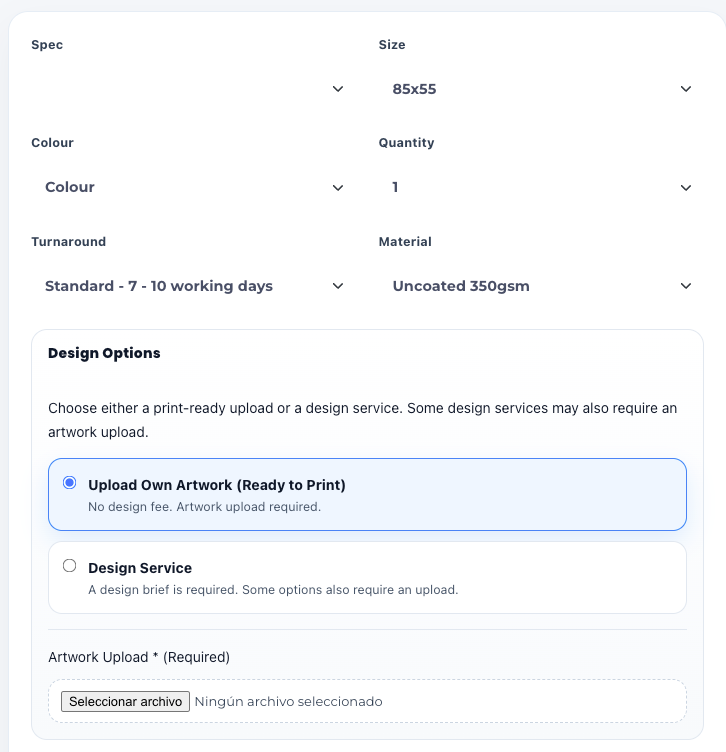
Custom pricing system and automation for a print eCommerce store
A WooCommerce store required advanced pricing logic and a structured workflow. A custom system was built to automate calculations, improve consistency and reduce manual work across the ordering process.
View case study AUTOMATION
Automation system for structured data and multi-site workflows
A platform required automated data processing and workflow consistency across multiple sites. The system reduced manual handling and improved reliability across the business.
View case studyAI for eCommerce starts by understanding how the store operates, not by choosing tools.
Most stores already have plugins, tools and partial systems in place. The goal is not to add more, but to improve how everything works together.
Understand the store
Analyse how orders, products, workflows and systems currently behave.
Identify friction
Find where time is lost, where processes break and where systems do not connect properly.
Build and refine
Implement the system and improve it based on real store usage.
Common questions about AI for eCommerce and how it works in practice.
These are the questions that usually come up when store owners want to improve operations, reduce manual work and make the ecommerce setup easier to manage.
What do you mean by AI for eCommerce?
It means using AI, automation and custom systems to improve how the store actually operates. That can include order workflows, support handling, internal processes, product logic and data movement across the business.
Is this only for large ecommerce businesses?
No. The right setup depends more on the operational problem than on the size of the business. Smaller stores can benefit as well when manual work, repeated tasks or inefficient workflows start getting in the way.
Does this replace WooCommerce plugins and existing tools?
Not always. In some projects, existing tools remain useful. In others, the right solution involves custom plugins or deeper technical changes because standard tools are no longer enough.
Is this mostly about automation?
Automation is often part of it, but not always the whole answer. Some stores need better workflows, custom logic or structured systems inside the platform, not just automated tasks.
Can this be added to an existing WooCommerce store?
Yes. Most projects are built on top of an existing WooCommerce setup and adapted to how the business already works.
What is the best way to start?
The best starting point is to describe your current store setup and explain where the friction is. From there, it becomes clearer whether the right solution is automation, custom development or a wider AI system.
If your store is growing but the operations behind it are becoming harder to manage, this is usually the next step.
The goal is not to add AI for the sake of it. The goal is to improve how the ecommerce business runs, reduce manual work and build systems that make the store easier to operate over time.
That can involve automation, custom plugin development or broader WooCommerce development depending on what the store actually needs.
Start with the real constraint
Understand what is slowing the store down before choosing any tool or feature.
Build the right system
Use automation, plugin logic or structured workflows where they actually improve operations.
Integrate with the store properly
Make the solution fit WooCommerce and the existing business workflow instead of forcing workarounds.
Scale with less friction
A better system makes future growth easier to manage without increasing complexity behind the scenes.