
WooCommerce custom plugin development in the UK for stores that need more than standard solutions.
Many WooCommerce stores reach a point where standard plugins are no longer enough. This is where custom plugin development becomes necessary, allowing you to build tailored functionality, automate workflows and create a more structured system around how the business actually operates.
I work with businesses across the UK to develop custom WooCommerce solutions that solve real problems — from complex product logic and pricing systems to automation, integrations and platform-level improvements.
Build features that do not exist in standard WooCommerce setups.
Reduce manual work and improve how processes run inside the store.
Structure how your store behaves, not just how it looks.
Most WooCommerce stores do not need more plugins. They need functionality that actually fits how the business works.
At the beginning, standard plugins are usually enough. But as the business grows, things start to break. Workflows become more complex, manual tasks increase and the store no longer behaves the way it needs to.
The limitation is not WooCommerce. It is relying on tools that were not built for your specific use case.
Many businesses try to solve this by adding more plugins. Over time, this creates a setup where tools overlap, conflict or fail to cover the real requirement. The result is a store that becomes harder to manage, slower to run and more difficult to scale.
This is usually the point where custom plugin development becomes necessary. Instead of forcing the business to adapt to the tools, the system is built around the way the business actually operates.
In more complex cases, this also connects with automation and broader AI systems, where the goal is not just to add functionality, but to improve how the entire store works as a system.
Too many plugins
Multiple tools trying to solve different parts of the same problem, often creating conflicts or unnecessary complexity.
Manual work
Tasks that should be automated still depend on manual handling, slowing down operations and increasing errors.
Limited functionality
The store cannot support the logic, workflows or behaviour required without heavy workarounds.
Custom WooCommerce plugin development means building functionality around your business, not around the limitations of existing tools.
Instead of combining multiple plugins and workarounds, the goal is to create a structured solution that fits exactly how your store needs to behave — from product logic and pricing to workflows, automation and integrations.
A custom plugin is not just code. It is part of a better system.
In most projects, the goal is not simply to build a feature. It is to improve how the store operates. That can include simplifying processes, reducing manual steps and making the system easier to manage over time.
This is why custom plugin work often connects with automation and wider AI systems. The focus is not isolated functionality, but how everything works together.
In many cases, this also sits alongside WooCommerce development, where the platform itself needs to be adapted to support the right structure.
Custom pricing and product logic
Build pricing rules, product configurations and behaviour that standard WooCommerce setups cannot handle.
Workflow automation
Automate processes across orders, internal tasks and data handling to reduce manual work.
System integrations
Connect WooCommerce with external tools, APIs and internal systems more reliably.
Platform-level improvements
Extend WooCommerce functionality beyond its default behaviour to support more complex business models.
You usually need custom WooCommerce plugin development when the store starts outgrowing standard solutions.
This is not about having a “big” store. It is about reaching a point where the way your business works no longer fits into standard plugins or default WooCommerce behaviour.
Complex product or pricing logic
When products require specific rules, dynamic pricing or configuration that standard plugins cannot handle properly.
Manual workflows that should be automated
When orders, data or internal processes still require manual handling and slow down the business.
Too many plugins trying to solve one problem
When multiple tools overlap, conflict or create a setup that is harder to manage instead of simpler.
Need for deeper integrations
When WooCommerce needs to connect properly with CRMs, APIs or internal systems in a more controlled way.
Store behaviour needs to change
When the way the store works needs to be adapted to the business, not the other way around.
Scaling is creating friction
When growth introduces complexity, inefficiencies or instability in workflows and operations.
Real WooCommerce projects where custom development solved operational problems.
These are not theoretical use cases. They are real projects where custom plugin development, automation and system-level thinking improved how the business operates.
 CUSTOM SYSTEM
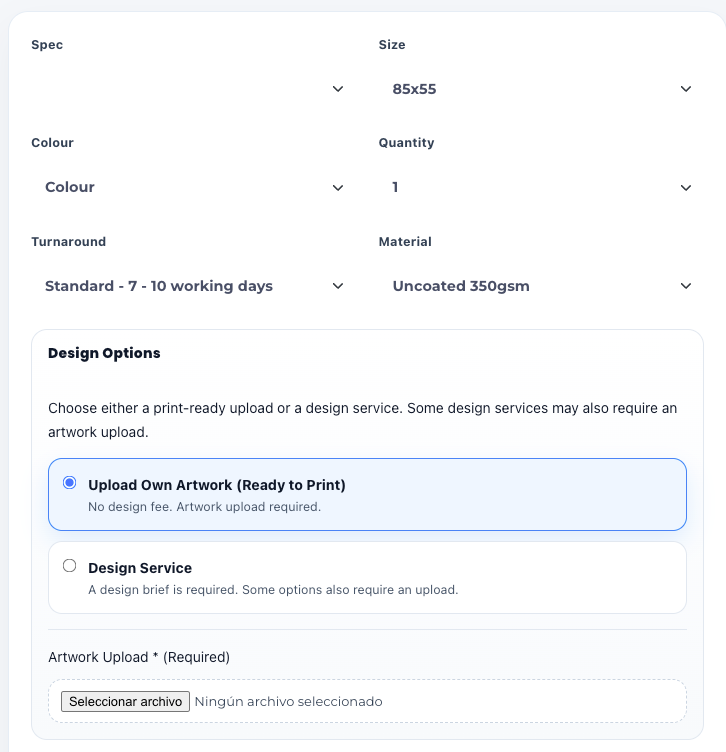
Custom pricing system for a WooCommerce store with complex product logic
A print-based ecommerce store needed a way to handle complex pricing rules and product configurations. A custom plugin was developed to automate calculations and reduce manual work across the ordering process.
View case study WORKFLOW SYSTEM
Automation system for structured workflows and data processing
A multi-site platform required better control over data imports and internal workflows. The solution reduced manual handling and improved consistency across the system.
View case studyCustom WooCommerce development is not about writing code first. It is about understanding how the system should work.
Most issues are not caused by missing features, but by how the current setup is structured. That is why the process focuses on clarity first, then implementation.
Understand the current setup
Analyse how the store works, where friction appears and what is actually limiting performance or workflows.
Define the right solution
Decide whether the solution is a custom plugin, automation or a broader system improvement.
Build and integrate
Develop the solution and integrate it properly into the existing WooCommerce setup.
Refine based on real usage
Improve the system over time based on how it performs in real business conditions.
Common questions about WooCommerce custom plugin development in the UK.
These are the questions that usually come up when businesses realise standard plugins are no longer enough for how the store needs to operate.
When do I need custom WooCommerce plugin development?
You usually need it when standard plugins cannot support the logic, workflows or integrations your store requires without workarounds or unnecessary complexity.
Is custom plugin development only for large stores?
No. The deciding factor is not store size, but whether the business needs functionality that standard solutions cannot handle properly.
Can a custom plugin be added to an existing WooCommerce store?
Yes. Most projects are built on top of an existing WooCommerce setup and integrated into the current store structure.
Does this also connect with automation or AI systems?
Often, yes. In many cases, custom plugin work connects with automation and wider AI systems where the store needs more structured behaviour.
Is custom development more reliable than using many plugins?
In many situations, yes. A well-built custom solution is often more stable and easier to manage than stacking multiple plugins that overlap or conflict.
What is the best way to get started?
The best starting point is to describe your current setup and explain what the store needs to do that it cannot do properly right now.
If your store needs functionality that standard plugins cannot support properly, the next step is defining the right logic.
In many cases, the problem is not WooCommerce itself. It is that the current setup is forcing the business into tools and workflows that do not really fit.
The right solution may involve custom plugin development, automation or broader WooCommerce development, depending on how the store actually needs to behave.
Start with the real requirement
Define what the store actually needs to do before choosing any tool or plugin.
Build the right logic
Custom functionality designed around your products, workflows and operations.
Integrate cleanly
A structured solution inside WooCommerce, not another disconnected layer.
Scale with more control
A better system gives the store more flexibility as the business grows.